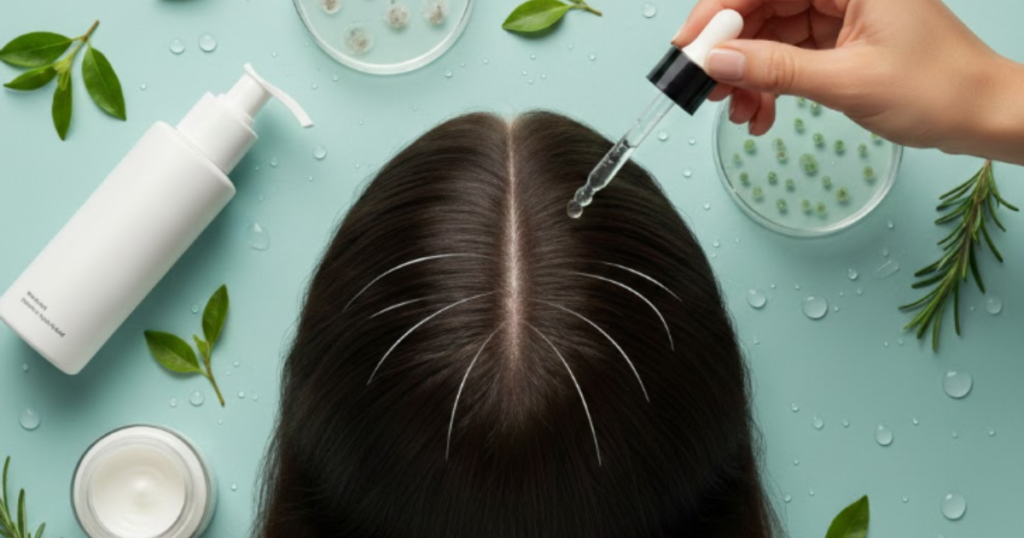
At Gloss Wellness, we understand the allure of a bottle that promises to save you twenty minutes in the morning. The Dry Shampoo has become the unofficial mascot of the modern, busy woman. It’s a miracle in a can—until it isn’t.
As specialists in scalp health, we are seeing a rising trend in what we call “Dry Shampoo Fatigue.” Clients are coming to us with thinning hair, persistent itching, and a total loss of natural shine. The culprit? Mismanaged use of Dry Shampoo. In this deep dive, we will uncover the chemical reality of these products and teach you how to use them without sabotaging your long-term hair goals.
How Dry Shampoo Actually Works (The Science)
It is a common misconception that this type of shampoo “cleans” the hair. In reality, it is a camouflage agent. The main ingredients—usually starches such as rice, corn, or aluminum—are porous molecules designed to adsorb (not absorb) oils.
When you spray Dry Shampoo, the starch particles cling to the sebum on your scalp. This makes the oil solid and matte, giving the illusion of cleanliness. However, the oil, the starch, the dead skin, and the bacteria are all still sitting on your scalp. You haven’t removed the dirt; you’ve just coated it in powder.
The Anatomy of a Spray
| Component | Function in Dry Shampoo | Impact on Scalp |
| Starches | Absorbs oil and adds “grip.” | Can clog follicles if not washed out. |
| Propellants | Delivers the spray (Butane/Isobutane). | Can be drying and irritating. |
| Alcohol | Helps the product dry quickly. | May disrupt the Scalp Microbiome. |
| Fragrance | Masks the smell of old sebum. | Common cause of contact dermatitis. |
The 3 Silent Killers: Why Your Scalp is Struggling
Over-reliance on Dry Shampoo leads to three specific biological issues that can permanently alter your hair quality.
A. Follicular Occlusion (The “Clogged Pore” Effect)
Just like sleeping in heavy foundation clogs your face, leaving on for 48+ hours creates a physical plug over the hair follicle. This is known as follicular occlusion. When the pore is blocked, the hair bulb cannot receive oxygen properly, which can lead to inflammation and, eventually, “miniaturization” of the hair (thinning).
B. Scalp Dysbiosis
Our previous guide on the Scalp Microbiome explained that your skin needs a balance of good bacteria. Dry Shampoo creates a dry, dusty environment that kills off beneficial microbes while allowing yeast like Malassezia to thrive under the layer of powder. This is why many people experience “dry shampoo dandruff.”
C. Mechanical Breakage
When hair is coated in Dry Shampoo, the friction between strands increases. The hair becomes “stiff.” When you brush or style hair that is full of starch, the strands are more likely to snap rather than glide.
The Comparison: Aerosol vs. Powder vs. Foam
Not all Dry Shampoo products are created equal. As a Gloss Wellness reader, you should know which format respects your biology.
| Format | Pros | Cons | Gloss Wellness Rating |
| Aerosol Spray | Easy to apply; adds volume. | High alcohol content; cold shock to scalp. | 2/5 (Use sparingly) |
| Loose Powder | No propellants; cleaner ingredients. | Messy; hard to distribute evenly. | 4/5 (Best for health) |
| Dry Foam | Hydrating; feels like a “wet” clean. | Takes longer to dry; can feel sticky. | 3/5 (Good for curls) |
The 7-Day Dry Shampoo Rule: A Specialist’s Protocol
If you must use Dry Shampoo, you must do it with a strategy. At Gloss Wellness, we endorse the “Rule of Two”: No more than two days in a row, and no more than two times per week.
How to Apply Like a Pro
- The 6-Inch Distance: Never spray Dry Shampoo directly onto the skin. Keep the nozzle 6 to 10 inches away to allow the propellants to evaporate before they hit your scalp.
- Sectioning: Don’t just spray the top. Lift sections and target the mid-shaft if possible, rather than the skin itself.
- The Wait Time: Let the Dry Shampoo sit for 2 minutes. Do not rub it in immediately. Let it sit, then “shake” it out with your fingers.
- The Night-Time Hack: Apply your Dry Shampoo before bed. This allows the powder to work overnight as you produce oil, resulting in less buildup by morning.
Is Your Dry Shampoo Causing Hair Loss?
The short answer is: Indirectly, yes.
Dry Shampoo does not cause genetic balding. However, it causes Traction Alopecia and Contact Dermatitis. If your scalp becomes chronically inflamed because it is “suffocating” under layers of powder, your body may trigger a shedding phase to protect itself. If you notice more hair in the drain after a week of heavy Dry Shampoo use, your scalp is sending you an SOS signal.
Detox: How to Recover from Dry Shampoo Overuse
If you’ve been a “dry shampoo addict,” your scalp needs a reset. You cannot simply wash it once with a regular shampoo and expect the buildup to vanish.
The Recovery Matrix
| Step | Action | Why it Matters |
| Step 1: Double Cleanse | Use a clarifying shampoo twice. | The first wash breaks the starch; the second cleans the skin. |
| Step 2: Exfoliate | Apply a Scalp Exfoliation treatment. | Removes the “cemented” sebum and powder plugs. |
| Step 3: Hydrate | Use a scalp-specific hyaluronic serum. | Restores the moisture lost to alcohol in the spray. |
| Step 4: Rest | Go 72 hours without any styling products. | Allows the Scalp Microbiome to stabilize. |
Ingredients to Avoid at All Costs
When reading the back of your Dry Shampoo can, watch out for these red-flag ingredients that compromise Scalp Health:
- Talc: Often contaminated with asbestos; too heavy for delicate follicles.
- Benzene: A known carcinogen recently found in many drugstore Dry Shampoo brands.
- Heavy Silicones: These create a “plastic” coating that makes Dry Shampoo nearly impossible to wash out without harsh sulfates.
- Aluminum Starch: Can be highly irritating to sensitive skin types.
Healthy Alternatives to Dry Shampoo
If you want the volume and oil-control without the damage, consider these Gloss Wellness approved alternatives:
- Microfiber Blotting: Use a clean microfiber towel to gently “blot” the roots. It removes oil without adding any product.
- Cornstarch & Cocoa Powder (DIY): If you must go the powder route, organic cornstarch mixed with a bit of cocoa (for dark hair) is much safer than aerosol chemical cocktails.
- The “Half-Wash”: Wash only your “fringe” or the very top section of your hair in the sink. It takes 5 minutes and gives you a fresh look without coating the whole scalp in Dry Shampoo.
Everything You’ve Been Afraid to Ask
Can I use Dry Shampoo on wet hair?
Absolutely not. It will create a “paste” that is incredibly difficult to remove and will lead to immediate follicular clogging.
I have an itchy scalp after using Dry Shampoo. What should I do?
This is likely a pH imbalance. Wash your hair immediately and apply a diluted apple cider vinegar rinse to restore the acid mantle.
Is there a “safe” Dry Shampoo?
Look for “Non-Aerosol,” “Benzene-Free,” and “Starch-Based” (Rice or Corn). Brands that prioritize Scalp Health over “extreme volume” are usually safer.
Conclusion: Balance Over Convenience
At Gloss Wellness, we aren’t telling you to throw away your Dry Shampoo forever. We are telling you to respect the biological limits of your scalp. Convenience should never come at the cost of your hair’s future.
Treat Dry Shampoo like an “emergency tool” rather than a “daily necessity.” When you do use it, ensure you follow up with a deep cleanse and Scalp Exfoliation to keep your follicles clear and your hair growing strong.
Your scalp is living tissue—let it breathe.
Don’t let convenience compromise your hair’s future. If you’ve used dry shampoo more than twice this week, your next step should be a deep detox. Learn how to safely remove product buildup in our masterclass: Scalp Exfoliation 101.