At Gloss Wellness, we’ve moved past the era of simply “washing” hair. We are now in the era of Scalp Science. If you’ve ever wondered why your hair feels dull despite using expensive masks, or why your scalp feels “tight” even after a deep cleanse, the answer isn’t in your strands. It’s in your Scalp Microbiome.
This invisible ecosystem is the most underrated factor in the luxury hair care world. Today, we are going to explore why your scalp is essentially a biological garden, and how mastering its bacteria is the only way to achieve that elusive, high-end editorial shine. This isn’t just a trend; it’s a fundamental shift in how we perceive human beauty through the lens of biology.
What Exactly is the Scalp Microbiome? (The Biology of Beauty)
The Scalp Microbiome is a complex community of trillions of microorganisms—bacteria, fungi, and even viruses—that live on the surface of your scalp. While the word “bacteria” used to be a dirty word in beauty, we now know that a sterile scalp is a vulnerable scalp.
These microbes act as your hair’s personal security detail. They produce essential nutrients, maintain the scalp’s acidic pH, and prevent “bad” pathogens from taking root. When your Scalp Microbiome is flourishing, your hair follicles are supported, inflammation is non-existent, and hair grows at its maximum potential. It is a symbiotic relationship: you provide the shelter (sebum and skin cells), and they provide the protection.
The “Big Three” Microbes You Need to Know
Understanding your scalp requires knowing who lives there. It’s not just about “germs”; it’s about a delicate balance of power.
| Microbe Name | Role in the Ecosystem | What happens when it’s out of balance? |
| Cutibacterium acnes | Feeds on sebum and helps maintain the acid mantle. | Can cause follicular inflammation and “scalp acne” if it over-proliferates. |
| Staphylococcus epidermidis | A “hero” bacteria that fights off harmful pathogens. | If depleted, the scalp becomes prone to sensitivity and external infections. |
| Malassezia Yeast | A natural inhabitant that feeds on scalp lipids. | When it grows too fast, it creates oleic acid, leading to dandruff and itching. |
The Skinification of Hair: Why Your Scalp is “Face Skin”
The biggest movement in professional hair care is Skinification. This means treating your scalp with the same respect, high-quality ingredients, and multi-step routines as you treat your face. Your scalp is actually an extension of your forehead, but it’s arguably more delicate. It has a higher density of sebaceous glands and hair follicles, which act as “open tunnels” for environmental toxins to reach the deeper layers of your skin.
If you wouldn’t wash your face with harsh dish soap or a high-pH bar, why are you using high-sulfate shampoos on your Scalp Microbiome? The goal of modern hair care is no longer “squeaky clean.” In the specialist world, “squeaky” means you’ve stripped the protective barrier. The new goal is “biologically balanced.”
Dysbiosis: The Silent Killer of Hair Growth and Shine
When your Scalp Microbiome is out of whack, scientists call it Dysbiosis. This is the state where the “bad” microbes outnumber the “good” ones, leading to chronic, invisible inflammation.
How do you know if you have Dysbiosis?
Most people mistake the signs of an unbalanced microbiome for “bad hair days,” “stress,” or “seasonal changes.” Look closer:
- The “Day 2” Odor: If your scalp smells sour, musty, or “metallic” just 24 hours after washing, your bacteria are literally fermenting the oils on your head.
- Follicular Tenderness: Does it hurt to move your hair or change your parting? That’s micro-inflammation triggered by a compromised Scalp Microbiome.
- The “Snow” Effect: Not all flakes are “dry skin.” Most are inflammatory responses to a yeast overgrowth within the microbiome.
- Loss of Root Lift: When the microbiome is imbalanced, the scalp often overproduces a heavy, waxy sebum that weighs down the hair at the root.
If you feel that your microbiome is struggling specifically due to excess sebum production, it’s crucial to manage the oil without stripping your natural defenses. You can find our specialized protocol in the guide: Oily Hair? The 10 Best Strategies for Scalp and Oily Hair.
The Deep-Dive Glossary of Microbiome-Friendly Ingredients
To be a true Gloss Wellness enthusiast, you must become a label-reader. The cosmetic industry is flooded with products that claim to be “natural” but are actually “microbiome-disruptors.” Here is a breakdown of what your scalp actually wants.
The “Super-Ingredients” for the Microbiome
- Prebiotics (Inulin, Alpha-Glucan Oligosaccharide): These are essentially “superfoods” for bacteria. They don’t add new bacteria but ensure your existing good microbes are strong enough to fight off invaders.
- Probiotics (Lactobacillus Ferment): These are deactivated beneficial bacteria that immediately soothe the skin barrier and signal the immune system to stop “attacking” the scalp.
- Postbiotics (Lactic Acid, Peptides): These are the healthy byproducts that bacteria produce. They help maintain the 5.5 pH level perfectly.
- Squalane: A biomimetic oil that mimics your natural sebum. It provides hydration without feeding the “bad” yeasts in the Scalp Microbiome.
The “Microbiome-Killers” (Avoid These)
| Ingredient Type | Common Names on Labels | The Damage Done |
| Harsh Sulfates | Sodium Lauryl Sulfate (SLS), Ammonium Lauryl Sulfate. | Raises pH and dissolves the “Acid Mantle,” killing good bacteria. |
| Drying Alcohols | Alcohol Denat, Isopropyl Alcohol. | Dehydrates the “soil” of your microbiome, causing cracks in the skin barrier. |
| Traditional Preservatives | Parabens, Methylisothiazolinone. | Designed to kill bacteria in the bottle, they continue killing “good” bacteria on your head. |
| Heavy Silicones | Dimethicone (in high amounts), Amodimethicone. | Creates an “occlusive” seal that suffocates aerobic (oxygen-breathing) microbes. |
The 4-Week “Microbiome Reset” Protocol
If you’ve been using harsh, commercial products, your Scalp Microbiome needs a “detox” period. It takes about 28 days for the skin cells on your scalp to turn over and for a new microbial colony to stabilize.
Week 1: The Transition
Stop all physical scrubs and high-sulfate shampoos. Switch to a “Microbiome-Friendly” certified cleanser. Warning: Your hair might feel slightly oilier this week. This is normal! Your scalp is used to overproducing oil to compensate for being stripped. Be patient.
Week 2: Reseeding the Garden
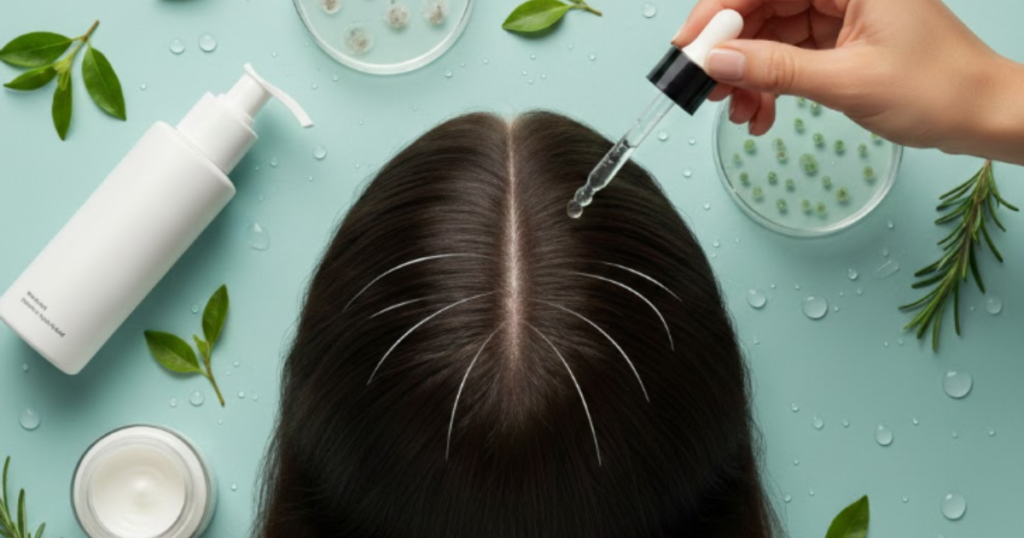
Introduce a water-based prebiotic serum every night. Apply it directly to the skin, not the hair. This is like “fertilizing” the soil. Focus on the crown and hairline, where the Scalp Microbiome is most exposed to UV rays and pollution.
Week 3: pH Restoration
This is the week for “Acidic Rinses.” Use a professional pH-sealing mist or a very diluted organic Apple Cider Vinegar rinse. This closes the hair cuticle and makes the environment “uncomfortable” for bad bacteria, allowing S. epidermidis to flourish.
Week 4: The Result
By now, you should notice less itching, no “Day 2” odor, and a natural “root lift” that stays. Your hair follicles are now working in a clean, balanced environment. This is the foundation of long-term hair growth.
The “Gut-Scalp Axis”: Why Your Diet Defines Your Shine
At Gloss Wellness, we believe beauty is an inside-out job. The Gut-Scalp Axis is a scientific reality. If your gut is inflamed due to poor diet, your body releases inflammatory cytokines that travel through the bloodstream and disrupt the Scalp Microbiome.
- Fermented Foods: Kimchi, Kombucha, and Kefir are your scalp’s best friends. They promote systemic balance.
- Zinc and Selenium: Found in Brazil nuts and pumpkin seeds, these minerals act as “natural regulators” for the sebum that feeds your Scalp Microbiome.
- Sugar and Yeast: High-sugar diets feed the Malassezia yeast on your scalp, leading directly to oiliness and dandruff.
The Psychology of the Scalp: Stress and the Microbiome
Did you know your Scalp Microbiome can “feel” your stress? This is the field of Psychodermatology. When you are stressed, your body produces cortisol. Cortisol changes the chemical composition of your sebum, making it more “attractive” to inflammatory bacteria.
This is why many people experience a “flare-up” of scalp issues during high-stress weeks. Managing your Scalp Microbiome isn’t just about shampoo; it’s about sleep, meditation, and lowering the systemic “heat” in your body.
Environmental Shields: Protecting the Ecosystem
Your Scalp Microbiome is an open system, which means it’s at the mercy of your environment.
- Hard Water Alert: The minerals in hard water (calcium/magnesium) react with scalp oils to create “soap scum” that traps bad bacteria against your skin. Action: Use a chelating rinse or a filtered shower head.
- UV Protection: UV rays are antimicrobial—but they kill the “good” microbes too. If you’re spending a day in the sun, treat your scalp like your face. Use a scalp-specific SPF or a silk scarf to protect the Scalp Microbiome.
- Pollution Protection: Urban “smog” oxidizes your scalp oils. Oxidized oil is toxic to the microbiome. A weekly “antioxidant scalp serum” is a must for city dwellers.
Answering Your Most Pressing Questions
Can I use dry shampoo and still have a healthy microbiome?
Sparingly. Dry shampoo absorbs oil, but it also sits on the scalp and can clog pores, creating an anaerobic (oxygen-free) environment where bad bacteria love to hide. If you use it, make sure to do a proper “double cleanse” on your next wash day to remove every trace.
Does coloring my hair kill my microbiome?
Yes, temporarily. Ammonia and bleach are high-pH chemicals that “shock” the ecosystem. After coloring, it is vital to use a post-color treatment that resets the pH to 5.5 immediately to prevent long-term dysbiosis.
How often should I wash to keep the microbiome happy?
For most, 2-3 times a week is the “Sweet Spot.” Washing daily is usually too aggressive, but waiting 7 days allows oil to oxidize and rot, which creates an “inflammatory soup” for your Scalp Microbiome.
Conclusion: The Luxury of a Balanced Scalp
In the world of Gloss Wellness, we know that luxury is about more than just a price tag—it’s about the intelligence behind the routine. Understanding your Scalp Microbiome is the ultimate act of self-care. It’s a move away from aggressive, short-term “fixes” and toward a long-term partnership with your body’s natural biology.
When you feed your microbiome, protect your pH, and choose ingredients with intention, the result isn’t just “clean” hair. It’s resilient, vibrant, and truly healthy hair that starts from the very first millimeter of growth. Respect the microbes, and they will reward you with a lifetime of glossy, powerful hair.