At Gloss Wellness, we’ve observed a fundamental shift in how the world approaches beauty. We call it the “Skinification of Hair.” This movement treats the scalp not as a separate entity, but as an extension of our facial skin. And if you wouldn’t dream of going months without exfoliating your face, why would you neglect your scalp?
If your hair has been looking flat, oily, or simply “stuck” in its growth phase, the answer isn’t necessarily a new shampoo. The answer is likely a lack of strategic Scalp Exfoliation. In this definitive guide, we’ll explore the deep science of detoxing your follicles and how to choose between the grit of a scrub and the precision of a chemical acid.
The Biological Necessity of Scalp Exfoliation
Your scalp is a high-traffic biological zone. It contains more sebaceous glands and hair follicles per square inch than almost any other part of the body. Because of this, it is prone to a condition we call Follicular Congestion.
Without regular Scalp Exfoliation, a “biofilm” forms. This is a sticky layer composed of oxidized sebum, dead skin cells (keratinocytes), and environmental pollutants like heavy metals from city air. This biofilm doesn’t just make your hair look greasy; it physically blocks new, fine hairs from emerging, leading to thinning over time. Scalp Exfoliation is the only way to effectively break this barrier.
Scalp Health Assessment: Do You Need Scalp Exfoliation?
Before diving into the products, let’s determine your current scalp status. Not every scalp needs the same frequency of Scalp Exfoliation.
The “Self-Check” Diagnostic Table
| Symptom | What it Means | Scalp Exfoliation Priority |
| The “Tug” Test | Hair feels heavy or sticky even after washing. | High – You have significant product buildup. |
| White/Grey Flakes | Dry skin or mild dandruff. | Medium – Needs gentle enzymatic exfoliation. |
| Shiny Roots | Scalp looks oily just 12 hours after washing. | High – Follicles are overproducing sebum. |
| Itching/Tenderness | Micro-inflammation or fungal activity. | Urgent – Needs chemical (BHA) exfoliation. |
| Flat Hair | Lack of natural “root lift.” | Medium – Needs physical exfoliation to clear the “crust.” |
Physical Scalp Exfoliation: The Sensory Power of Scrubs
Physical or mechanical Scalp Exfoliation is what most people visualize when they think of a “scalp scrub.” It involves using small, gritty particles to manually buff away debris.
The Mechanism of Action
When you perform physical Scalp Exfoliation, you are using friction to lift the outermost layer of dead skin. This process is incredibly effective for removing “macro-debris”—like the stubborn remains of dry shampoo or hairspray that regular surfactants can’t dissolve.
Pros and Cons of the Physical Method
- The Pro-Experience: There is a psychological benefit to the “scrubbing” sensation. It feels like a deep clean. Moreover, the manual massage increases vasodilation, which brings a rush of nutrient-rich blood to the hair bulbs.
- The Specialist’s Warning: You must be careful with the shape of the particles. At Gloss Wellness, we only recommend spherical beads or dissolving granules (like sugar). Jagged particles, such as crushed apricot seeds, can cause micro-tears, which lead to infections and long-term scarring of the follicle.
Chemical Scalp Exfoliation: The Precision of Acids
In the world of professional trichology, chemical Scalp Exfoliation is often the preferred choice. Instead of rubbing the surface, you apply liquid “smart molecules” that dissolve the cellular glue holding dead skin cells together.
The Science of AHAs and BHAs
Chemical Scalp Exfoliation allows for a deeper reach. While a scrub cleans the surface, a chemical peel can enter the follicle itself.
| Acid Type | Solubility | Role in Scalp Exfoliation | Best For |
| Salicylic Acid (BHA) | Oil-Soluble | Dissolves sebum plugs inside the pore. | Oily & Acne-prone scalps. |
| Glycolic Acid (AHA) | Water-Soluble | Intense surface shedding and brightness. | Heavy buildup & “thick” skin. |
| Lactic Acid (AHA) | Water-Soluble | Exfoliates while acting as a humectant. | Dry, sensitive, or aging scalps. |
| Mandelic Acid (AHA) | Water-Soluble | Larger molecule; very gentle and slow. | Extremely reactive or dark skin. |
The Ingredients Masterlist: What to Look For
When you are browsing for your next Scalp Exfoliation treatment, don’t just look at the marketing. Read the INCI list. At Gloss Wellness, we look for a balance of “Exfoliators” and “Soothers.”
Top 10 Ingredients for Scalp Exfoliation
- Salicylic Acid: For deep follicle “digestion.”
- Fruit Enzymes (Papain/Bromelain): For gentle, non-acidic cell removal.
- Bamboo Charcoal: To absorb urban toxins during Scalp Exfoliation.
- Sugar Granules: A physical exfoliant that dissolves, preventing over-scrubbing.
- Peppermint/Menthol: To increase blood flow post-exfoliation.
- Aloe Vera: To prevent the “tight” feeling after a deep clean.
- Tea Tree Oil: For antimicrobial protection during Scalp Exfoliation.
- Gluconolactone (PHA): For the most sensitive, easily irritated scalps.
- Sea Salt: Only for the oiliest of scalps (use with caution).
- Hibiscus Extract: A natural source of AHAs for organic Scalp Exfoliation.
The Specialist’s Ritual: A Step-by-Step Home Spa
To get the most out of your Scalp Exfoliation, you cannot just treat it like a regular shampoo. It requires a specific protocol to ensure safety and efficacy.
The 15-Minute Scalp Exfoliation Protocol
- Step 1: The Pre-Wash Detangle. Use a wide-tooth comb to remove any tangles. This ensures the Scalp Exfoliation product reaches the skin, not just the hair.
- Step 2: Sectioning. Divide your hair into 4 quadrants. This is how we do it at Gloss Wellness—it ensures no spot is left congested.
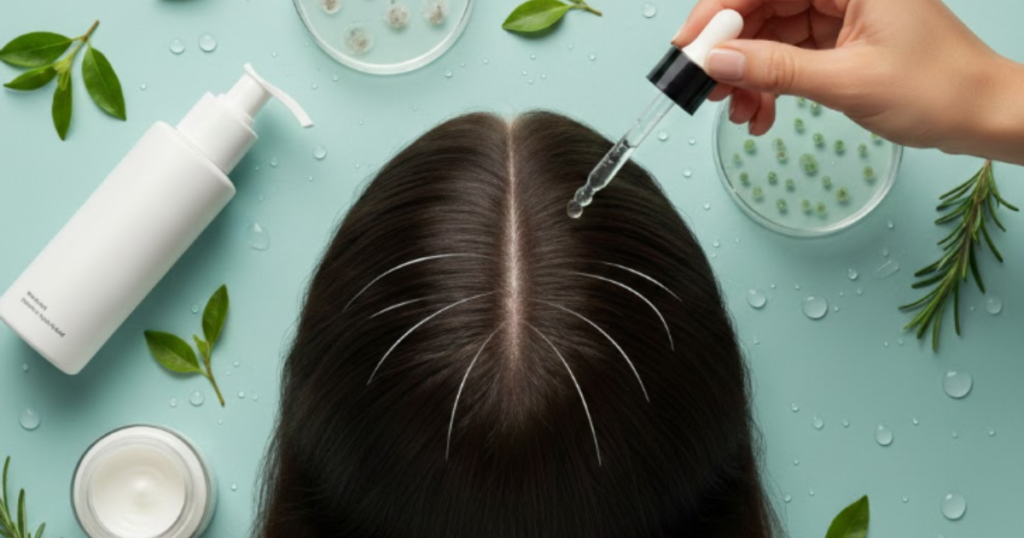
- Step 3: Application. Apply the product directly to the scalp. If using a scrub, use only the pads of your fingers. If using an acid, use a dropper for precision.
- Step 4: The Dwell Time. For chemical Scalp Exfoliation, wait 5-8 minutes. For physical, massage for 3 minutes.
- Step 5: The Emulsification. Add a tiny bit of water and massage again before rinsing. This “activates” the surfactants to carry the debris away.
- Step 6: The Double Rinse. Rinse until the water runs 100% clear. Any left-over Scalp Exfoliation residue can cause major irritation.
The Advanced Bio-Hack: After completing Step 6, your hair fibers are at their most “naked” and receptive state. With the mineral shield and product buildup completely gone, it is the most effective time to perform a molecular bond repair at home. Since the cuticle is clear and the scalp is detoxed, the repair peptides can travel straight to the cortex without any interference, doubling the efficacy of your structural reconstruction.
Exfoliation is just one pillar of a high-performance hair journey. To see how to integrate this ritual into a complete, daily and weekly system, explore our Scalp Health Routine: The Ultimate Specialist Guide, where we break down every step from detox to hydration.
Frequency and Seasons: When to Exfoliate
Your Scalp Exfoliation needs change with the weather and your lifestyle.
| Season | Scalp Condition | Recommended Frequency |
| Summer | High sweat, UV exposure, salt/chlorine. | Twice a week (Physical + BHA). |
| Winter | Dryness, hat-wearing, low humidity. | Once every 10 days (Hydrating AHA). |
| Spring/Fall | Seasonal shedding and transition. | Once a week (Enzymatic). |
If you follow a heavy moisture regimen—common in any professional hair care routine for 4c hair—exfoliation is non-negotiable. It ensures that the heavy butters and sealants don’t clog your pores and stunt growth.
Identifying the “Danger Zone”: Over-Exfoliation
At Gloss Wellness, we often see clients who have “over-loved” their scalp. Too much Scalp Exfoliation destroys the Acid Mantle, which is the protective film that keeps bad bacteria out.
Watch out for these signs of excessive Scalp Exfoliation:
- Your scalp looks “shiny” or “waxy” but feels incredibly dry.
- You experience a burning sensation when applying even gentle products.
- Sudden, tiny red bumps around the hair follicles.
- A “rebound” oiliness where your hair feels greasy just hours after Scalp Exfoliation.
Scalp Exfoliation and the Growth Cycle
Can Scalp Exfoliation truly stop hair loss? Not exactly, but it can stop Premature Shedding.
When the scalp is congested, it becomes a breeding ground for a yeast called Malassezia. This yeast triggers an inflammatory response. The body, sensing inflammation at the root, may push the hair from the Anagen (growth) phase into the Telogen (resting) phase prematurely. By performing regular Scalp Exfoliation, you remove the yeast’s food source (sebum) and keep the hair in the growth phase for longer.
DIY vs. Professional Grade: A Serious Warning
It is tempting to mix sea salt and coconut oil in your kitchen for a “natural” Scalp Exfoliation. However, as specialists, we must advise against this.
- pH Imbalance: Kitchen ingredients like lemon juice or baking soda have pH levels that are far too extreme (too acidic or too alkaline). This can “nuke” your scalp microbiome in one use.
- Rinsability Issues: Food-grade oils are not designed to be washed out of hair follicles. They can leave a film that actually increases congestion, defeating the whole purpose of Scalp Exfoliation.
- Micro-Lesions: Table salt and kitchen sugar often have sharp, irregular edges that cause microscopic cuts on the scalp.
FAQ: Answering Your Most Pressing Questions
Can I exfoliate if I have color-treated hair?
Yes, but choose a Chemical Scalp Exfoliation method. Aggressive physical scrubs can “scuff” the hair cuticle near the roots, making your color look dull.
Does Scalp Exfoliation hurt?
Never. You might feel a slight “tingle” with acids or an “invigorating” sensation with scrubs, but if it hurts, stop immediately. Your barrier is likely compromised.
Can I exfoliate after a gym session?
This is actually the best time! Sweat contains salts that can clog pores. A gentle Scalp Exfoliation post-workout is the ultimate detox.
Nutrition: Feeding the New Skin
When you remove dead cells through Scalp Exfoliation, your body must build new ones. Give it the right materials:
- Vitamin E: Protects the new skin cells from oxidative stress.
- Vitamin A (Retinoids): Supports natural cell turnover so you don’t need to exfoliate as aggressively.
- Selenium: Works with Scalp Exfoliation to keep dandruff-causing fungi at bay.
Conclusion: Your Scalp is the Foundation of Your Beauty
We spend hundreds of dollars on conditioners that only treat the “dead” part of our hair. It’s time to invest in the living part. Scalp Exfoliation is the bridge between basic hygiene and high-performance beauty.
Whether you choose the grit of a luxury scrub or the molecular power of an acid peel, remember that consistency is key. Treat your scalp like the precious “garden” it is. Clear the path, feed the soil, and watch your hair transform from the root up.
Welcome to the elite world of scalp care. Welcome to Gloss Wellness.