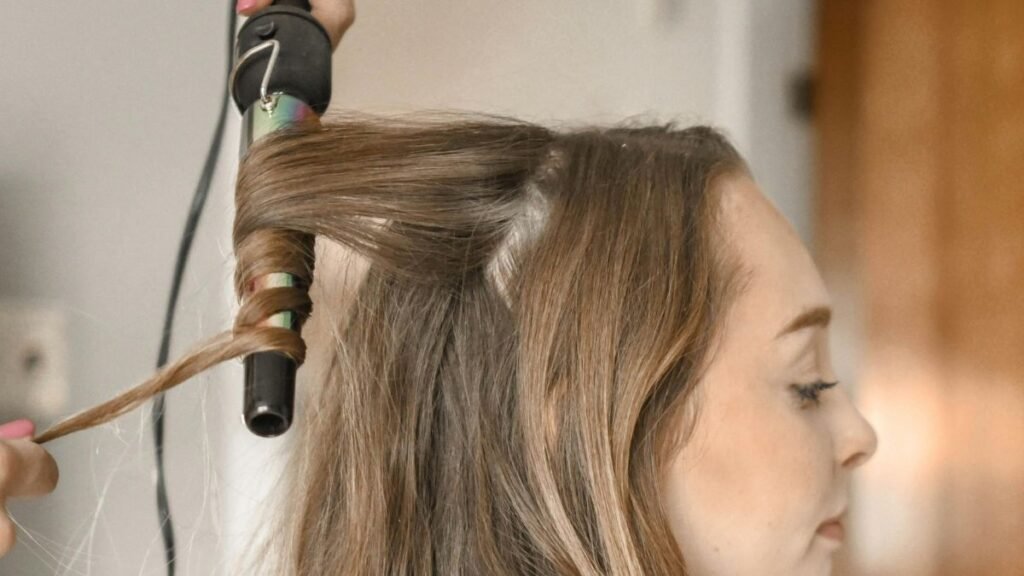
In the world of 2026 hair care, we have officially moved past the “band-aid” era. For decades, we relied on heavy silicones and oils to hide damage, but today, we are obsessed with structural integrity. If your hair feels mushy when wet, snaps when you brush it, or has lost its natural curl pattern, you aren’t just looking for moisture—you need molecular bond repair at home.
Unlike traditional masks that sit on top of the cuticle, molecular bond repair at home works within the cortex. It targets the disulfide bonds—the chemical “rungs” of the ladder that hold your hair structure together. When these bonds break due to bleach, excessive heat, or environmental stress, the hair loses its “memory” and its strength. This guide will teach you how to rebuild that architecture from your own bathroom.
The Chemistry of Damage: Disulfide vs. Hydrogen Bonds
To succeed with molecular bond repair at home, you must understand what you are actually fixing. Your hair is held together by three main types of bonds:
- Hydrogen Bonds: Broken by water and heat. These are temporary and reset when the hair dries.
- Salt Bonds: Influenced by pH levels. This is why our scalp detox at home and acidic rinses are so important.
- Disulfide Bonds: These are the “heavy hitters.” They are covalent bonds that provide permanent shape and strength. When these break, the hair becomes structurally compromised.
A true molecular bond repair at home protocol specifically targets these disulfide links using patented peptides or specific amino acid chains that “mimic” the hair’s natural keratin.
Comparison: Bond Builders vs. Deep Conditioners
| Feature | Molecular Bond Repair at Home | Traditional Deep Conditioner |
| Target Area | Internal Cortex (Disulfide Bonds) | External Cuticle (Surface) |
| Key Ingredient | Peptides, Bis-Aminopropyl | Fatty Alcohols, Silicones |
| Result | Permanent structural strength | Temporary softness and shine |
| Frequency | Once a week (or as needed) | Every wash day |
| Porosity Impact | Essential for High Porosity | Good for all, but doesn’t fix “gaps” |
Understanding this difference is the first step in your molecular bond repair at home journey. You cannot replace one with the other; they are two sides of the same coin.
The 2026 Protocol: Step-by-Step Bond Reconstruction
This is a specialized routine. If you perform molecular bond repair at home incorrectly, you might end up with stiff, brittle hair. Follow this “Bio-Alignment” sequence:
Step 1: The Clarifying Prep
Bond repair molecules are tiny, but they cannot penetrate through layers of dry shampoo and hard water minerals. Use a chelating shampoo or a scalp exfoliation treatment first. Your hair must be a clean slate for molecular bond repair at home to be effective.
Bond repair molecules are tiny, but they cannot penetrate through layers of dry shampoo and hard water minerals. Use a chelating shampoo or, for a more natural mineral reset, perform a scalp detox with clay first. Your hair must be a clean slate for molecular bond repair at home to be effective, ensuring nothing blocks the formula from reaching the core of the fiber.
Step 2: The Application (Damp, not Sopping)
Towel-dry your hair until it is about 70% damp. If the hair is too wet, the water in the cortex will block the bond-repairing peptides from entering. Apply your molecular bond repair at home treatment in sections, focusing on the areas with the most chemical damage.
Step 3: The Wait (The Chemical Reaction)
Most 2026 bond builders require a minimum of 4 to 10 minutes to “link” the broken disulfide chains. Do not rush this. This is the core of the molecular bond repair at home process.
Step 4: The Moisture Seal
Bond builders focus on strength, not softness. After rinsing your molecular bond repair at home treatment, you must follow up with a natural hair moisturizer to restore pliability.
Can You Do Bond Repair Naturally?
While “bond building” is often associated with synthetic patents (like Olaplex or K18), 2026 has brought us fascinating bio-alternatives for molecular bond repair at home.
- Amino Acid Infusions: Using hydrolyzed silk or wheat proteins can provide temporary “patches” to the bonds.
- Cold-Pressed Chia Seed Oil: High in omega-3s that help reinforce the lipid barrier surrounding the bonds.
- Fermented Rice Water: As discussed in our rice water for hair growth guide, the Inositol in rice water can penetrate the hair and help repair it from within, acting as a primitive form of molecular bond repair at home.
Porosity: The Gatekeeper of Bond Repair
Your hair porosity level dictates how often you should perform molecular bond repair at home.
Table 2: Frequency and Intensity Matrix
| Porosity Type | Damage Level | Frequency | Treatment Type |
| Low Porosity | Low (Virgin Hair) | Once a month | Liquid/Mist Repair |
| Medium Porosity | Moderate (Heat tools) | Every 2 weeks | Cream-based Repair |
| High Porosity | High (Bleach/Color) | Once a week | Concentrated Peptide Mask |
For those with high porosity, molecular bond repair at home is not a luxury—it is a survival tactic to prevent the hair from disintegrating.
The Science of 2026: Biomimicry and Peptides
The latest breakthrough in molecular bond repair at home is biomimicry. Scientists have mapped the human keratin genome to create “decapeptides” that fit perfectly into the broken rungs of your hair’s ladder.
When you apply these treatments, you aren’t just “coating” the hair. You are essentially “welding” it back together. This is why a successful molecular bond repair at home protocol can make 4C hair feel softer and more manageable, and 1A hair look thicker and more voluminous.
“After rebuilding your hair’s internal structure, don’t let mechanical friction ruin it. Protect your investment by sleeping on a Silk Pillowcase for Hair to keep the hair scales flat and sealed.
⚠️ The Danger of Over-Repairing (Protein Overload)
In your quest for molecular bond repair at home, be wary of the “stiffness trap.” If you use bond builders too frequently without balancing them with moisture, your hair will lose its hair elasticity.
The Sign of Over-Repair: Your hair feels like straw, doesn’t move naturally, and snaps when you try to curl it. If this happens, stop your molecular bond repair at home routine immediately and switch to a “hydration only” phase for two weeks.
FAQ: Deep Dive into Bond Repair
Is molecular bond repair at home the same as a protein treatment?
No. Protein treatments (like our how to make rice water for hair) fill gaps in the cuticle with large molecules. Molecular bond repair at home uses much smaller molecules to fix the internal disulfide bonds. They work on different levels of the hair’s anatomy.
Can I leave bond repair treatments in overnight?
Most 2026 formulas are designed to work in under 10 minutes. Leaving a molecular bond repair at home treatment in overnight doesn’t usually provide extra benefits and might actually lead to scalp irritation or moisture fatigue.
Will it fix split ends?
Technically, nothing “glues” a split end back together permanently. However, molecular bond repair at home strengthens the hair shaft above the split, preventing it from traveling higher and forcing you to cut off more length later.
Can I use it on extensions?
Yes! Since extensions don’t receive natural oils from the scalp, they become highly porous over time. A molecular bond repair at home session can extend the life of your extensions by months.
Is it safe for children?
Children generally have virgin, undamaged hair. They don’t need the intensive level of molecular bond repair at home unless their hair has been severely damaged by chlorine or environmental factors.
DIY “Bond-Support” Mask (The 2026 Natural Recipe)
While true molecular welding requires lab-engineered peptides, this DIY mask supports the structural integrity of your hair between molecular bond repair at home sessions.
- 1/2 Avocado: Rich in amino acids and biotin.
- 1 tbsp Gelatin (Unflavored): Provides a protein boost that mimics keratin.
- 1 tsp Argan Oil: For the lipid layer protection.
Apply to clean, damp hair and leave for 20 minutes. This is the perfect “maintenance” step for your molecular bond repair at home journey.
Conclusion: Rebuilding the Foundation
As we conclude our 50-article journey here at Glosswellness, we realize that beauty is a reflection of health. Molecular bond repair at home represents the pinnacle of modern hair care—the ability to undo the damage of the past and rebuild a stronger future for your strands.
By understanding the difference between moisture and strength, and by respecting the delicate chemistry of the disulfide bond, you are taking full control of your hair’s destiny. Your hair isn’t just a style; it’s a biological masterpiece. Treat it with the structural respect it deserves.