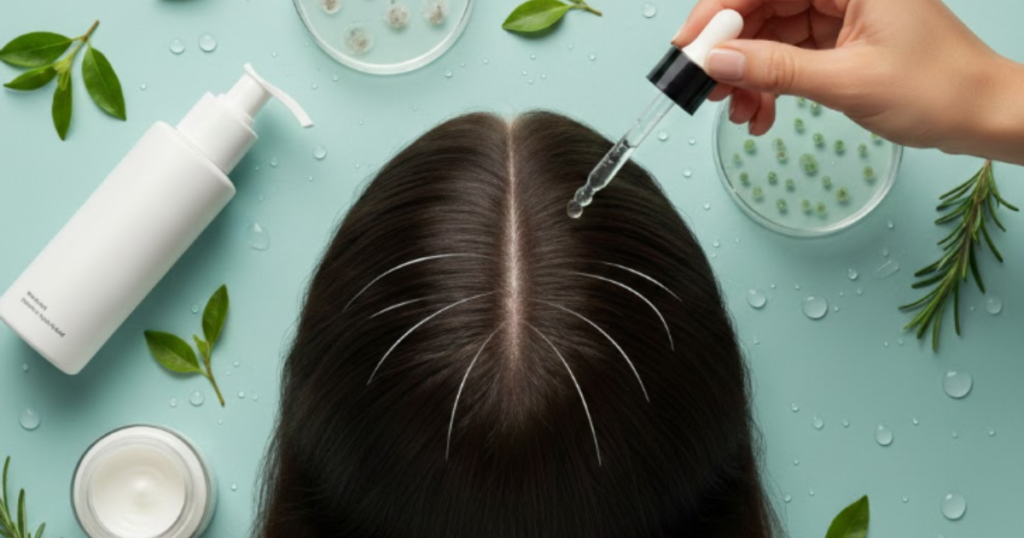
If you’ve ever felt like your hair has simply “stopped growing,” you’re likely not looking deep enough. The secret to lush, resilient hair isn’t found in the dead ends of your strands, but in the living, breathing factory beneath your skin: the follicle. In 2026, the global wellness community has shifted its focus from “hair repair” to “follicle activation.” To achieve true thickness, you don’t just need a better conditioner—you need a potent hair follicle stimulator.
But what exactly qualifies as a stimulator? Is it a tool, a chemical, or a botanical extract? In this comprehensive guide, we’ll explore how to identify the best hair follicle stimulator for your hair type and how to integrate these powerhouses into your daily routine for maximum results.
The Biology of “Waking Up” Your Hair
Every hair on your head operates on a cycle: Anagen (growth), Catagen (transition), and Telogen (resting). When your hair looks thin or grows slowly, it’s often because too many follicles are stuck in the Telogen phase. This is where a hair follicle stimulator comes into play.
By increasing microcirculation and delivering oxygen to the hair bulb, these stimulators “signal” the follicle to enter the Anagen phase. Without a proper hair follicle stimulator, your scalp might have the nutrients it needs, but the “delivery truck” (blood flow) never reaches the destination.
Natural vs. Synthetic: Which Stimulator is Right for You?
When choosing a hair follicle stimulator, the market is generally split into two camps: the pharmaceutical giants and the botanical powerhouses.
The Science-Backed Comparison
| Feature | Botanical Stimulators (Rosemary/Peppermint) | Synthetic Stimulators (Minoxidil/Redensyl) |
| Primary Mechanism | Vasodilation & Antioxidant protection | Potassium channel opening |
| Side Effects | Rare (minimal scalp irritation) | Possible dryness, itching, or “dread shed” |
| Sustainability | High (renewable resources) | Moderate (chemical manufacturing) |
| Long-term Use | Excellent for maintenance | Requires consistent application to keep results |
While many reach for synthetic options first, the 2026 trend favors a hybrid approach. Using a natural hair stimulator like rosemary water often provide similar results without the harsh side effects of chemicals.
Mechanical Stimulation: The Power of Touch
Sometimes, the best hair stimulator isn’t a liquid at all—it’s mechanical. Scalp massage and the use of specialized tools have gained massive popularity because they trigger “mechanotransduction.” This is a process where mechanical pressure actually changes the behavior of cells.
When you use a silicone brush or your fingertips as a hair follicle stimulator, you are physically stretching the cells of the hair follicle. This stretching stimulates the production of signaling proteins that tell the hair to grow thicker.
Gloss Wellness Tip: Spend 4 minutes a day massaging your scalp. It is the most cost-effective hair follicle stimulator available, and it costs exactly zero dollars.
Top 5 Ingredients to Look for in a Hair Follicle Stimulator
If you are shopping for a professional serum, keep an eye on the ingredient list. Not all “growth serums” are created equal. To be a true hair stimulator, the product should contain at least one of these:
- Caffeine: Not just for your morning latte! Caffeine penetrates the skin easily and acts as a world-class hair follicle stimulator by suppressing DHT (the hormone responsible for hair loss).
- Peppermint Oil: Known for its cooling sensation, it’s a powerful vasodilator.
- Rosemary Oil: In 2026, clinical trials continue to show that rosemary is a top-tier natural hair follicle stimulator, comparable to 2% Minoxidil.
- Biotinoyl Tripeptide-1: A “biotech” stimulator that helps anchor the hair more firmly in the follicle.
- Ginseng: An ancient remedy that remains a staple hair stimulator due to its ginsenosides, which promote cell proliferation in the hair bulb.
The “Silo” Effect: Preparing Your Scalp for Stimulation
Applying a hair follicle stimulator to a dirty, clogged scalp is like trying to water a plant through a layer of concrete. This is where your broader Scalp Health routine becomes vital.
- Step 1: Exfoliate. Use a chemical peel or a physical scrub to remove dead skin.
- Step 2: Stimulate. Apply your chosen hair follicle stimulator while the pores are clear and blood flow is high.
- Step 3: Maintain. Balance the microbiome to ensure the stimulator can work without fighting off dandruff or inflammation.
Technology in 2026: LED and Laser Stimulators
We cannot talk about the modern hair follicle stimulator without mentioning Low-Level Laser Therapy (LLLT). Red light therapy (wavelengths between 630nm and 670nm) has been proven to stimulate the mitochondria in your hair cells.
By boosting ATP (energy) production within the cell, red light acts as a non-invasive hair stimulator. It’s the perfect companion for someone who is already using botanical waters but wants to level up their tech game.
For those with tighter coils, a stimulator is only half the battle. To retain the length that your follicles are producing, you must pair this treatment with a consistent hair care routine for 4c hair to keep the strands flexible and strong.
Common Myths About Follicle Stimulation
In the quest for the perfect hair follicle stimulator, many myths have surfaced. Let’s clear the air:
- “Shaving your head makes hair thicker”: False. Shaving doesn’t affect the follicle. To change thickness, you must use a hair follicle stimulator that reaches the root.
- “More is better”: False. Applying a hair follicle stimulator five times a day won’t make your hair grow five times faster. Consistency is more important than quantity.
- “Results are instant”: Hair grows at an average of 1.25cm per month. Any hair stimulator will require at least 90 days of consistent use to show visible change in density.
Lifestyle: The “Internal” Hair Follicle Stimulator
Finally, we must remember that the body prioritizes vital organs over hair. If you are stressed or malnourished, your body will “shut down” non-essential functions like hair growth. In this sense, a balanced diet is your primary internal hair follicle stimulator.
- Iron & Ferritin: Essential for oxygen transport to the follicle.
- Zinc: Involved in DNA and RNA production in the hair bulb.
- Scalp Tension Release: Stress causes the scalp muscles to tighten, restricting blood flow. Learning to relax your jaw and brow can actually act as a passive hair stimulator.
Frequently Asked Questions: Mastering Follicle Stimulation
To ensure you have all the tools needed for your journey, we’ve compiled the most common questions regarding the use of a hair follicle stimulator. These insights will help you avoid common pitfalls and maximize your results.
How often should I use a hair follicle stimulator?
Consistency is the heartbeat of hair growth. For a topical hair stimulator like rosemary water or a lightweight serum, daily application is ideal. If you are using a mechanical hair stimulator—such as a derma roller or a vigorous scalp scrub—you should limit use to 1-2 times a week to avoid over-exfoliation and inflammation. Remember, the goal is to stimulate, not to irritate.
Can I use a hair follicle stimulator on colored or chemically treated hair?
Absolutely. Most natural options, especially a water-based hair follicle stimulator, are safe for color-treated hair as they don’t contain harsh alcohols that strip pigment. In fact, keeping the scalp healthy with a hair follicle stimulator is essential for those who color their hair frequently, as chemical treatments can sometimes cause scalp sluggishness and thinning.
Is it better to apply a hair follicle stimulator to wet or dry hair?
For maximum absorption, apply your hair follicle stimulator to a clean, damp scalp. When the skin is slightly warm and moist (post-shower), the pores are more receptive to active ingredients. However, if you are using a leave-in hair follicle stimulator in a spray format, it can be applied to dry hair daily for maintenance without ruining your style.
Can stress deactivate my hair follicles?
Yes. High levels of cortisol (the stress hormone) can push hair follicles into a premature resting phase. While a hair follicle stimulator works on the outside, managing stress works on the inside. Combining a daily hair follicle stimulator with a 5-minute relaxation practice can significantly reduce “stress-shedding.”
Does a hair follicle stimulator work for receding hairlines?
A hair follicle stimulator is most effective where the follicle is still alive but “dormant.” If the area is completely smooth and shiny (meaning the follicle has closed), topical treatments may have limited success. However, for thinning edges and early recession, a potent hair follicle stimulator can help strengthen the remaining hairs and encourage new sprouts to fill in the gaps.
Can men and women use the same hair follicle stimulator?
In 2026, the science shows that the biological mechanism of hair growth is largely the same across genders. While some hormonal factors differ (like DHT sensitivity), a high-quality hair follicle stimulator like caffeine or rosemary works effectively for everyone. The only exception is pharmaceutical stimulators, which sometimes have gender-specific concentrations.
What happens if I stop using my hair follicle stimulator?
If you are using a natural hair follicle stimulator, your hair will slowly return to its biological baseline over several months. You won’t experience a sudden “crash.” However, if you are using a chemical hair follicle stimulator like Minoxidil, stopping abruptly can lead to significant shedding, as the follicles have become dependent on the chemical signal to stay in the growth phase.
Conclusion: Consistency is the Real Secret
Finding the right hair follicle stimulator is a journey of trial and error. Whether you choose the ancient wisdom of Ayurvedic oils or a high-tech laser cap, the key is the “daily habit.”
The most expensive hair follicle stimulator in the world won’t work if it stays in the bottle. Pick a method that fits your lifestyle, stick with it for three months, and watch your “soil” produce the thick, glossy “plants” you’ve always wanted.
Ready to start your growth journey?
Now that you know how to choose a hair follicle stimulator, why not start with the most popular natural method? Check out our viral guide on how to make rosemary water for hair growth and thickness and start stimulating those follicles today!