If you have ever spent a fortune on high-end salon products only to find your hair feeling dry and brittle again 24 hours later, you aren’t alone. In 2026, the beauty world is seeing a massive shift toward “Bio-Hacking” hair care—returning to ingredients that the hair fiber actually recognizes. The most effective tool in this revolution is a high-quality natural hair moisturizer.
But what exactly defines a natural hair moisturizer? In a market flooded with “greenwashing,” finding a formula that actually penetrates the hair cortex rather than just coating it in wax is a challenge. To achieve that “liquid silk” finish, we need to look at ingredients that balance water-based hydration with lipid-based nutrition. This is why a homemade natural hair moisturizer often outperforms commercial alternatives: you control the purity and the potency.
???? The Biological Necessity: Why Hair Needs Natural Moisture
Hair is essentially a fiber made of keratin, held together by a delicate balance of water and oils. When the cuticle—the outer layer—becomes damaged by heat, pollution, or harsh sulfates, it loses its ability to hold onto water. This is where a natural hair moisturizer steps in.
Unlike synthetic moisturizers that use silicones (like dimethicone) to create a fake sense of softness, a natural hair moisturizer uses plant-derived humectants and emollients. These molecules are small enough to enter the “gaps” in the hair cuticle, repairing the strand from the inside out.
Table 1: Natural vs. Synthetic Moisturizing Agents
| Feature | Natural Hair Moisturizer (Plant-Based) | Synthetic Moisturizer (Store-Bought) |
| Primary Goal | Deep cortex hydration and repair. | Surface-level shine and “slip.” |
| Breathability | High (Does not suffocate the strand). | Low (Can build up and cause dryness). |
| Nutrient Density | Rich in vitamins, enzymes, and lipids. | Often relies on mineral oils and waxes. |
| Environmental Impact | Biodegradable and eco-friendly. | Contains microplastics and parabens. |
???? The Gold Standard Recipe: Aloe & Coconut Milk
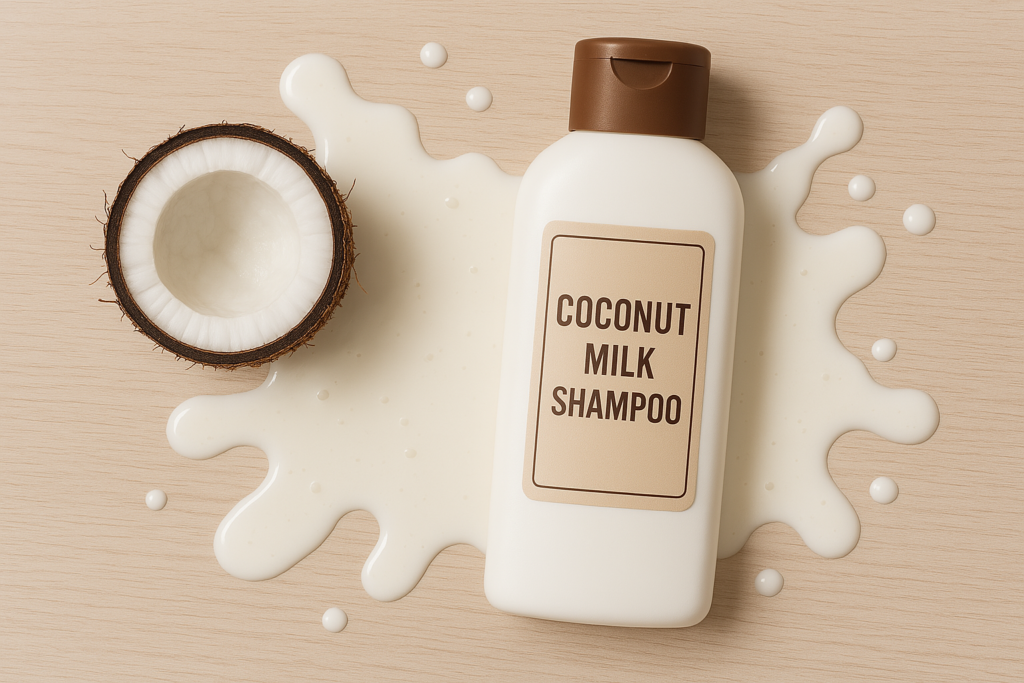
If you are looking for the absolute best natural hair moisturizer you can make in your kitchen, the combination of fresh Aloe Vera and full-fat Coconut Milk is unmatched. This duo targets the two main causes of dryness: lack of internal water (hydration) and lack of surface lipids (nutrition).
Why this combination works:
- Aloe Vera: Acts as a powerful humectant. It contains proteolytic enzymes that repair dead skin cells on the scalp, making it an incredible natural moisturizer for the roots as well.
- Coconut Milk: Rich in lauric acid and essential fats. It has a high affinity for hair proteins, allowing this natural moisturizer to strengthen the fiber while it softens.
????️ How to Craft Your Natural Hair Moisturizer
To get professional results from your natural moisturizer, you cannot just mix things in a bowl with a spoon. You need to create an emulsion.
Ingredients Checklist:
- 1/2 cup Fresh Aloe Vera Gel (Must be fresh for the enzymes).
- 1/4 cup Full-Fat Coconut Milk (The lipids are essential).
- 1 tsp Vitamin E Oil (A natural antioxidant).
For the best results, apply your DIY moisturizer to clean, damp hair. If it’s been a while since your last deep cleanse, we recommend a scalp detox with clay first. This mineral-rich treatment removes the ‘film’ that often prevents natural oils from penetrating the hair shaft.
The 2026 Protocol:
- Extraction: Scrape the gel from the aloe leaf, avoiding the yellow aloin.
- The Emulsion: Place all ingredients in a high-speed blender. This is the secret to a luxury-grade natural moisturizer. Blending breaks down the molecules into a creamy latte consistency that the hair can “drink” instantly.
- The Application: Section your hair. Apply the natural hair moisturizer from roots to ends. For deeper penetration, wear a reusable heat cap for 20 minutes.
???? Matching Your Moisturizer to Your Hair Type
Not every hair texture needs the same amount of moisture. Using the hair typing system, we can customize how often you use your natural hair moisturizer.
Table 2: Usage Guide by Texture
| Hair Type | Frequency | Application Focus |
| Type 1 (Straight) | Once a month | Only the bottom 2 inches. |
| Type 2 (Wavy) | Every 2 weeks | Mid-lengths to ends. |
| Type 3 (Curly) | Once a week | Full saturation. |
| Type 4 (Coily) | Twice a week | Focus on roots and ends for elasticity. |
If you have fine hair, you might worry that a natural hair moisturizer containing coconut milk will be too heavy. The secret is the rinse—always use lukewarm water to ensure no residue is left behind.
???? Advanced Biohacking: Customizing Your Formula
A great natural hair moisturizer should be adaptable. Depending on the season or your hair’s current state, you can add “boosters” to the base recipe.
- For Extreme Humidity: Add 1 tsp of Raw Honey. It’s a humectant that helps the natural hair moisturizer keep your hair soft even in dry weather.
- For Scalp Issues: Add 5 drops of Rosemary oil. This turns your natural hair moisturizer into a hair follicle stimulator.
- For High Porosity: Add 1 tbsp of Apple Cider Vinegar. This helps the natural hair moisturizer seal the cuticle after the nutrients are inside.
???? Comparison: Best Ingredients for a Natural Hair Moisturizer
| Ingredient | Role | Best For |
| Aloe Vera | Humectant | All hair types; Scalp health. |
| Coconut Milk | Lipid Replenisher | Dry, brittle, and high-porosity hair. |
| Honey | Moisture Binder | Thick, coarse hair textures. |
| Argan Oil | Sealant | Adding shine and “glass hair” finish. |
| Avocado | Nutrient Bomb | Extremely damaged or chemically treated hair. |
⚠️ Troubleshooting Your Natural Hair Moisturizer
“My hair feels stiff after using a natural hair moisturizer.”
This sometimes happens if your hair has a protein-moisture imbalance. If a natural hair moisturizer makes your hair feel “hard,” try reducing the amount of coconut milk and increasing the aloe vera.
“I’m seeing flakes.”
Natural products can react with leftover synthetic products on your hair. Before starting a natural hair moisturizer routine, use a scalp exfoliation treatment to clear any silicone buildup.
❄️ Storage and Sustainability
A true natural hair moisturizer is a fresh product. Because it doesn’t contain parabens, you have to treat it like fresh food.
- Immediate Use: For the best enzymatic activity, use your natural hair moisturizer within 30 minutes of making it.
- Short-term Storage: You can keep it in the fridge for up to 24 hours.
- Freezing: You can freeze your natural hair moisturizer in ice cube trays for up to 3 months. This is a great way to always have a professional-grade treatment ready.
✨ The 2026 Philosophy: Why Nature Wins
In 2026, we are finally realizing that we cannot “chemistry” our way out of hair damage. The most effective natural hair moisturizer isn’t the one with the most complex patent; it’s the one that respects the biology of the strand.
By choosing a natural hair moisturizer, you are opting out of the cycle of buildup and stripping. You are giving your hair the raw materials it needs to repair itself. Whether you are following a scalp health routine or trying to define your curls, moisture is the foundation of everything.
???? FAQ: Common Questions
Can a natural hair moisturizer replace my conditioner?
Yes and no. A natural hair moisturizer is usually a deep treatment. For daily use, you can dilute your mixture with distilled water to create a lightweight “leave-in” spray.
Will a natural hair moisturizer make my hair grow faster?
Directly, no. But indirectly, yes! By keeping the hair elastic and hydrated, a natural hair moisturizer prevents the breakage that makes it look like your hair has “stopped growing.”
Is it safe for kids?
Absolutely. A homemade natural hair moisturizer is one of the safest things you can use on children’s delicate hair patterns, as it is free from hormone-disrupting fragrances.
Conclusion: Reclaiming Your Natural Gloss
Mastering the use of a natural hair moisturizer is the single most important step in any wellness-focused hair journey. It bridges the gap between basic hygiene and professional-level care. By using the Aloe and Coconut Milk formula, you are treating your hair to a feast of enzymes and lipids that no store-bought product can truly replicate.
Start your natural hair moisturizer journey this week. To ensure those plant-based nutrients stay locked inside your hair fibers for maximum shine, we recommend sealing them with a Hair Slugging Routine overnight. Your hair—and the planet—will thank you for choosing the power of plants over the convenience of chemicals.