Welcome to Gloss Wellness. The relationship between curly hair and hair loss can feel uniquely distressing. Curls, by their nature, are fragile. The twists and turns in the hair shaft make them susceptible to breakage, which is often misinterpreted as true hair loss. However, when you see significantly more hair on your pillow, in the shower, or on your brush, you might be facing a deeper issue than simple breakage.
Dealing with curly hair loss requires separating mechanical damage from physiological shedding. Ignoring the signs can lead to thinning, loss of density, and overall distress. Understanding the intricate balance between your curl pattern’s fragility and the health of your scalp is the definitive path to successful restoration.
In this comprehensive, expert-level guide, we will analyze the primary root causes of curly hair loss, provide a clear protocol for diagnosis, and detail the targeted treatments and routine adjustments necessary to stop excessive shedding, protect your curl structure, and revitalize your density.
Differentiating Breakage from True Curly Hair Loss
The first, and most critical, step in managing curly hair loss is determining the type of shedding you are experiencing. Shedding (telogen effluvium) is hair falling out from the root; breakage is the hair snapping somewhere along the shaft.
| Characteristic | Breakage | True Hair Loss (Shedding) |
| Appearance of the Strand | Short strands, often tapered or frayed on one end. | Full-length strands, usually with a tiny white bulb (the root/follicle) attached. |
| Location of Loss | Uniformly throughout the hair, often where tension is highest (e.g., elastics, dry detangling). | Concentrated on the scalp, seen more after washing or brushing. |
| Density Impact | Hair feels thinner, especially at the ends. | Noticeable widening of the part line, overall reduction in density. |
| Primary Cause | Mechanical stress, chemical damage, extreme dryness. | Hormonal shifts, stress, nutritional deficiency, scalp inflammation. |
If you are seeing full-length strands with the white bulb attached, you are dealing with genuine curly hair loss, and your focus must shift from surface treatments to systemic and scalp health solutions.
The Root Causes of Curly Hair Loss
For curly hair types, true shedding can often be exacerbated by three core areas that require focused attention:
1. Chronic Scalp Inflammation
Healthy hair growth requires a healthy foundation. Curly hair routines often involve many products (creams, gels, oils) that, if not cleansed properly, lead to buildup. This buildup causes follicular inflammation, fungal overgrowth (dandruff), and blocked pores. An inflamed scalp creates a hostile environment, pushing hair prematurely into the shedding phase. This is a common, and overlooked, trigger for curly hair loss.
2. Nutritional and Systemic Deficiencies
Hair is non-essential tissue; when the body is stressed or depleted, it diverts resources away from hair growth first. Major deficiencies are a massive contributor to curly hair loss:
- Iron (Ferritin): Low iron stores are a primary cause of telogen effluvium, especially in women.
- Vitamin D & B12: Essential for cell division and the hair cycle.
- Protein: Hair is made of protein (keratin); insufficient protein intake limits the body’s ability to grow new strands.
3. High Tension and Styling Stress
While not the cause of systemic hair loss, tension can turn temporary shedding into permanent loss for curly hair. Styles that constantly pull on the follicle (tight buns, heavy extensions, tight braids/cornrows) cause Traction Alopecia. This is a specific form of curly hair loss that permanently damages the follicle over time.
The Restoration Protocol: Stopping Curly Hair Loss
Managing and reversing curly hair loss requires a strategic protocol focusing on internal support and targeted topical stimulation.
Phase 1: Scalp Detox and Treatment (Topical Focus)
The goal here is to optimize the follicular environment using ingredients known to stimulate growth and reduce inflammation.
| Product Type | Function for Curly Hair Loss | Key Ingredients to Look For | Application |
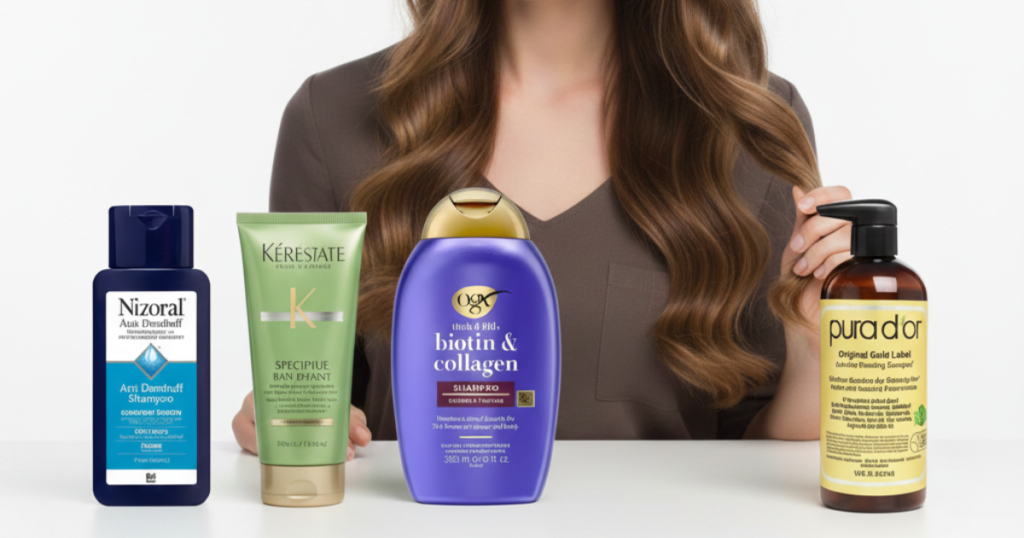
| Detoxifying Cleanser | Removes buildup, flakes, and inflammation, ensuring clean follicles. | Salicylic Acid, Tea Tree Oil, Piroctone Olamine (anti-fungal). | Every wash day, focusing on massage. |
| Minoxidil (Topical) | FDA-approved growth stimulant; extends the anagen (growth) phase. | 2% or 5% concentration. | Apply directly to thinning areas once or twice daily. |
| Targeted Serums | Block DHT (the hormone linked to pattern baldness) and boost circulation. | Caffeine, Rosemary Oil, Peppermint Oil, Biotin, Redensyl. | Massage into the scalp daily, focusing on areas with curly hair loss. |
Expert Tip: When applying any topical treatment, use a dedicated scalp massager. The gentle pressure increases blood flow (circulation) to the scalp, which maximizes the delivery of nutrients and active ingredients to the hair follicle.
Phase 2: Nutritional and Lifestyle Support (Systemic Focus)
Addressing the root cause requires internal correction.
- Blood Work: Consult a physician for comprehensive blood tests, specifically checking Ferritin, Vitamin D, and Thyroid levels. Supplements should only be taken based on a diagnosed deficiency.
- Stress Management: Chronic stress elevates cortisol, which can disrupt the hair growth cycle. Practices like meditation, yoga, and ensuring adequate sleep are vital to halting stress-induced curly hair loss.
- Protein Intake: Ensure your diet includes sufficient lean proteins (fish, chicken, legumes, eggs) to provide the building blocks for keratin production.
Gentle Routine Adjustments to Protect Your Curls
Your mechanical routine must be overhauled to ensure you are not causing breakage that worsens the visible impact of curly hair loss.
1. Detangling with Extreme Care
Detangling is the moment of highest mechanical stress for curly hair.
- Always Wet: Never detangle curly hair loss when it is dry. Apply a conditioner with maximum “slip.”
- The Right Tool: Use only a seamless wide-tooth comb or a flexible detangling brush designed for wet hair.
- Technique: Start at the ends and work your way up to the roots, releasing tangles gently. Aggressive pulling is a major cause of breakage and should be eliminated to preserve density.
2. Styling and Tension Reduction
If you are battling curly hair loss, minimize anything that pulls on the scalp.
- Avoid Tight Styles: Eliminate tight ponytails, high buns, and cornrows that cause sustained tension at the hairline (the site of Traction Alopecia).
- Air Dry or Diffuse Gently: High heat can weaken the already fragile curl bonds. Air drying is preferable, or use a diffuser on the lowest heat setting.
- Silk Protection: Continue to use silk or satin pillowcases/bonnets. This minimizes friction and breakage that occurs while sleeping.
3. Chemical Processing and Coloring
Chemical treatments (bleaching, relaxing, permanent straightening) structurally weaken the hair shaft, making it more brittle and susceptible to snapping. If you are experiencing curly hair loss, you must put a moratorium on all chemical processes until the shedding has stabilized and new growth is robust.
The Hair Growth Cycle and Patience
Reversing curly hair loss is not an overnight process. The hair growth cycle has three main phases:
- Anagen (Growth): Lasts 2–7 years.
- Catagen (Transition): Lasts 2–3 weeks.
- Telogen (Rest/Shedding): Lasts 2–4 months.
When a stressful event or deficiency occurs, it takes about three months for the hair to prematurely enter the Telogen phase and fall out. Similarly, once you begin treatment, it typically takes 3 to 6 months before you see new, noticeable growth (often appearing as tiny baby hairs near the hairline). Consistency and patience are non-negotiable elements in the treatment plan for curly hair loss.
While curly types 3A-3C focus on definition, preventing loss in tighter coils requires a specific hair care routine for 4c hair that prioritizes low-manipulation and high-moisture retention.
Frequently Asked Questions for Curly Hair Loss
How can I tell if I am experiencing true curly hair loss or just normal breakage?
Examine the hair strands you find. True curly hair loss (shedding) involves full-length hairs that usually have a tiny white bulb (the root) attached to one end. Breakage involves shorter strands that look frayed or tapered at the ends and snap somewhere along the shaft. If you see many full-length hairs with the white bulb, it indicates a scalp/systemic issue.
What is the most critical first step to take when trying to stop curly hair loss?
The most critical first step is addressing scalp health. Buildup and inflammation on the scalp create a hostile environment that leads to excessive shedding. Use a detoxifying or clarifying shampoo regularly and implement a targeted topical serum (like Minoxidil, Rosemary, or Caffeine) combined with daily scalp massage to increase blood flow to the follicles.
Does tight styling (like buns or braids) actually cause permanent curly hair loss?
Yes, tight styling can cause a specific type of hair loss called Traction Alopecia. This form of curly hair loss is caused by continuous, excessive pulling on the hair follicle, typically around the hairline. Over time, this chronic tension can permanently damage the follicle, leading to permanent thinning in those areas.
What are the key nutritional deficiencies linked to increased curly hair loss?
The main deficiencies that disrupt the hair growth cycle are Iron (specifically Ferritin levels), Vitamin D, Vitamin B12, and Protein. Since hair is a non-essential tissue, the body sheds it when resources are low. Consulting a doctor for blood work is essential to diagnose and treat these systemic causes of curly hair loss.
Why do I only see significant curly hair loss on my wash day?
It is normal to see a large amount of shedding on wash day. Hair that was naturally scheduled to shed (in the Telogen phase) often remains trapped within your curl clumps until you manipulate and detangle the hair. As long as the hair shed on wash day remains within the typical range (around 50-100 hairs), it is considered normal. However, if the amount dramatically increases, it is time to investigate the root cause of the curly hair loss.
VI. Conclusion: Taking Control of Your Density
Experiencing curly hair loss can be deeply discouraging, but it is manageable. By systematically addressing potential deficiencies, reducing mechanical stress on your fragile curl pattern, and committing to a supportive scalp treatment routine, you can create the optimal environment for follicular health and regrowth. The complexity of curly hair demands a sophisticated approach—treat your scalp with the same care you give your curls.
Don’t wait to seek professional advice. If shedding persists or if you notice distinct bald patches, consult a dermatologist or trichologist specializing in hair loss for a formal diagnosis.
Did you find this deep dive into curly hair loss helpful? Share your experiences and tips for regrowth in the comments below!