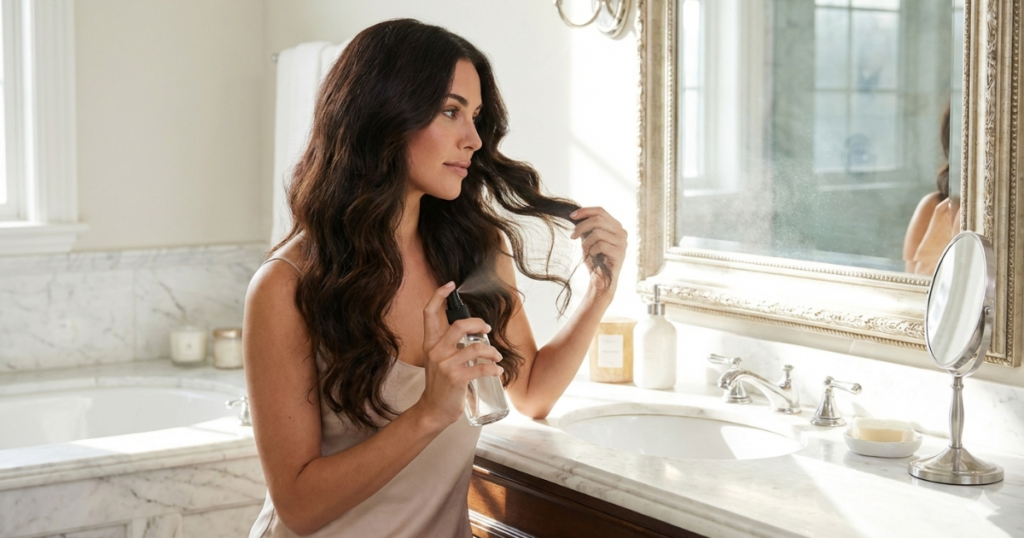
If you have ever felt like your hair has a split personality: soaking up water instantly in the shower only to feel dry as straw an hour later, you aren’t alone. You are likely dealing with high porosity hair.
For many, this hair type can feel unmanageable, prone to frizz, tangles, and breakage. However, in the world of hair wellness, knowledge is power. Having high porosity isn’t a curse; it is simply a structural characteristic that requires a specific, science-backed approach to care.
In this definitive guide here at Gloss Wellness, we are diving deep into the microscopic structure of your strands, the best ingredients to look for, and the exact routine you need to turn dry, brittle strands into a crown of hydrated glory.
High porosity requires a specific protein-to-moisture balance. If you haven’t performed a tactile diagnostic yet, see our 3 accurate ways to check hair porosity to see if your cuticles are truly raised or damaged.
Understanding the Architecture: What is High Porosity Hair?
To truly care for your hair, you must understand its anatomy. Imagine your hair strand is like a roof covered in shingles. These shingles are the cuticles, the outermost layer that protects the delicate inner cortex.
In high porosity hair, these “shingles” are lifted, widely spaced, or even missing in some areas.
Because these gaps exist, moisture can enter the hair shaft very easily. This is why your hair gets wet immediately when you step under the spray. However, because those cuticles remain open, that moisture escapes just as quickly as it entered. There is no barrier to keep the hydration locked inside.
The Two Types of High Porosity
It is important to distinguish between the two root causes of this texture:
- Genetic High Porosity: Some people are simply born with naturally lifted cuticles. This is common in certain curly and coily hair textures.
- Induced High Porosity: This is caused by damage. Chemical processing (bleaching, relaxing), excessive heat styling, and environmental damage can blast open the cuticles, turning low or medium porosity hair into high porosity hair over time.
The Tell-Tale Signs: Do You Have High Porosity Hair?
Before you overhaul your beauty cabinet, let’s confirm your diagnosis. While the famous “float test” (putting a strand of hair in water) is popular, it isn’t always accurate due to product buildup or surface tension.
Instead, look for these specific behavioral traits of high porosity hair:
- Rapid Drying: Your hair dries incredibly fast compared to others, sometimes in under an hour without a blow dryer.
- The Tangle Struggle: Due to the raised cuticles, strands act like Velcro, latching onto each other and causing friction and knots.
- Product Thirst: It feels like your hair “eats” product. You apply a heavy cream, and five minutes later, it looks like you applied nothing.
- Dullness: Because the surface is rough (lifted cuticles), it doesn’t reflect light well, often looking matte or dull rather than shiny.
- Frizz Halo: Humidity is your enemy. Because your hair is desperate for moisture, it reaches out into the atmosphere to absorb water vapor, causing instant swelling and frizz.
The Golden Rule: Protein and Moisture Balance
Managing high porosity hair is a balancing act between two essential elements: Moisture (water/hydration) and Protein (structure).
Because the cuticle has gaps, the structural integrity of the hair is compromised. You need protein to temporarily “fill in” those potholes in the hair shaft, and you need heavy emollients to create an artificial seal over the cuticle to trap moisture.
If you only use moisture, the hair becomes mushy and overly elastic (hygral fatigue). If you only use protein, it becomes brittle and snaps. For high porosity hair, you generally need a higher protein intake than other hair types, but it must be followed by intense sealing.
The Gloss Wellness Protocol: A Step-by-Step Routine
Here is the expert-recommended routine to restore health and shine to high porosity hair.
Step 1: Pre-Poo (Pre-Shampoo Treatment)
Since highly porous hair gets waterlogged easily, it is susceptible to swelling and breaking during the wash process. A “pre-poo” with a penetrating oil (like coconut or olive oil) protects the hair fiber.
- How to do it: Apply oil to dry hair 30 minutes before washing. This acts as a buffer against the harsh detergents of shampoo.
Step 2: The Wash
Avoid sulfates at all costs. Sulfates strip natural oils, which high porosity hair desperately needs. Look for moisturizing, creamy cleansers.
- Pro Tip: Wash with lukewarm water. While cold water is often cited to “close” cuticles, it doesn’t actually shut them tightly enough for high porosity types. Lukewarm helps dissolve dirt without stripping lipids.
Step 3: Protein Treatments and Deep Conditioning
This is the non-negotiable step. You should be deep conditioning every single wash day.
- Rotation: Alternate between a moisture-rich deep conditioner and a protein treatment. If your hair feels limp and gummy, it needs protein. If it feels hard and rough, it needs moisture.
Step 4: The L.O.C. Method (Liquid, Oil, Cream)
This is the holy grail layering technique for high porosity hair. Since your cuticles won’t stay closed on their own, you must physically layer products to create a seal.
- Liquid (L): Water or a water-based leave-in conditioner. This provides the hydration.
- Oil (O): An oil to seal the hydration.
- Cream (C): A heavy butter or styling cream to lock everything down and smooth the cuticle.
The Role of Sealants in High Porosity Hair Because high porosity strands have gaps and holes in the cuticle layer, they lose moisture almost as fast as they absorb it. Using heavy sealants like shea butter or oils is essential to “lock in” hydration. However, if you apply too many heavy products without checking your hair’s elasticity, you might accidentally cause a Protein vs Moisture Overload. Balancing your sealants with the right structural support is the only way to keep porous hair healthy and bouncy.
Ingredients Decoder: What to Look For (and What to Avoid)
When shopping for high porosity hair, you need to become an ingredient detective. You want ingredients that are “occlusive” (sealants) and “hydrolyzed” (proteins small enough to penetrate).
Here is a cheat sheet for your next shopping trip:
| Category | Best Ingredients for High Porosity Hair | Why It Works |
| Heavy Butters | Shea Butter, Mango Butter, Cocoa Butter | These create a thick barrier that mimics a closed cuticle, trapping water inside. |
| Heavy Oils | Castor Oil, Olive Oil, Hemp Seed Oil | Unlike light oils (like jojoba), these sit on top of the strand to prevent moisture loss. |
| Proteins | Hydrolyzed Wheat, Silk, or Keratin Protein | These micro-proteins fill the gaps and holes in the cuticle layer, strengthening the strand. |
| Humectants | Glycerin, Honey, Aloe Vera | These draw moisture from the air into the hair. Note: Use with caution in extreme humidity. |
| Acidifiers | Apple Cider Vinegar, Aloe Juice | Lower pH ingredients help encourage the cuticle to lie flatter. |
Ingredients to Avoid:
- Harsh Sulfates (SLS): Strip necessary oils.
- High pH products: Baking soda or alkaline soaps will raise the cuticle even further, which is disastrous for high porosity hair.
- Isopropyl Alcohol: Extremely drying.
Because high porosity hair absorbs water like a sponge, it is extremely vulnerable to Hygral Fatigue. Learning how to seal the cuticle is your first line of defense against this structural damage.
Styling and Maintenance: Keeping the Moisture In
Once you have washed and moisturized, how you handle your hair during the week is critical. High porosity hair is fragile; mechanical damage is a real threat.
1. Heat Styling: Proceed with Caution
Heat is a major cause of induced porosity. If you must use heat, always use a silicon-based heat protectant. Silicones get a bad rap, but for high porosity hair, they are excellent at filling gaps and protecting the cortex from heat damage. However, air drying or low-heat diffusing is always preferable.
2. Detangling
Never detangle this hair type when it is dry. The friction will cause breakage immediately. Always detangle when the hair is soaking wet and coated in conditioner with a lot of “slip.” Use a wide-tooth comb or a brush designed for wet hair, starting from the ends and working your way up to the roots.
3. Apple Cider Vinegar (ACV) Rinses
Because high porosity hair has a raised cuticle, it often has a higher pH. An acidic rinse (like ACV mixed with water) helps to lower the pH of the hair surface, encouraging those cuticles to lay flat. This can significantly increase shine and reduce tangling. Use this once every two weeks.
The Nighttime Routine: Protecting Your Investment
You can ruin a perfect wash day by sleeping on the wrong fabric. Cotton pillowcases are absorbent; they will suck the moisture right out of your high porosity hair while you sleep. Furthermore, the rough texture of cotton snags the raised cuticles, causing friction and breakage.
** The Solution:**
- Silk or Satin Pillowcases: These fabrics allow the hair to glide, reducing friction.
- Pineapple or Bonnet: Put your hair up loosely or wear a satin bonnet to keep the ends protected. The ends are the oldest and most porous part of your hair, so they need the most protection.
Troubleshooting: Why is My High Porosity Hair Still Dry?
Even with the best products, you might hit a wall. Here are common reasons why your high porosity hair might still be struggling:
- Hard Water: Mineral buildup from tap water can block moisture from entering. If you live in a hard water area, use a chelating shampoo once a month to remove mineral deposits.
- Product Build-up: Because you need heavy butters and oils to seal high porosity hair, you are prone to buildup. If your hair feels coated but dry underneath, clarify your hair to reset the canvas.
- Environmental Factors: In very dry climates, humectants (like glycerin) can actually work against you. Instead of drawing moisture from the air (because there is none), they draw moisture out of your hair. In dry weather, rely more on heavy oils and less on glycerin.
Frequently Asked Questions About High Porosity Hair
What exactly does it mean to have “High Porosity Hair”?
It means the outer layer of your hair (the cuticle) has lifted, widely spaced, or even damaged “shingles.” This structure allows water and moisture to rush into the hair shaft quickly (which is why your hair gets wet instantly), but it also allows that moisture to escape just as quickly, leading to chronic dryness and persistent frizz.
What is the golden rule for managing and restoring High Porosity Hair?
The golden rule is achieving a balance between Protein and Moisture, immediately followed by an intense sealing process. High porosity hair needs protein (like Hydrolyzed Keratin or Silk) to temporarily “fill the gaps” in the cuticle, and it requires heavy emollients and oils (such as Shea Butter or Castor Oil) to create an artificial barrier that locks the essential moisture inside the strand.
What is the L.O.C. Method, and why is it crucial for High Porosity Hair?
L.O.C. stands for Liquid, Oil, and Cream. It is the essential layering technique used to seal hydration.
L (Liquid): Water or a water-based leave-in conditioner (to provide hydration).
O (Oil): A heavy sealing oil, like Olive Oil or Castor Oil (to trap the hydration).
C (Cream): A heavy styling cream or butter (to lock everything down and smooth the cuticle layer). This method is vital because it physically layers products onto the strand to prevent the rapid moisture loss characteristic of high porosity hair.
What ingredients should I look for and which should I avoid in products for this hair type?
Look for:
Heavy Sealants: Shea Butter, Cocoa Butter, Castor Oil, Olive Oil (Occlusive ingredients).
Penetrating Proteins: Hydrolyzed Wheat, Silk, or Keratin Protein (to strengthen the strand).
Acidifiers: Apple Cider Vinegar (ACV) and Aloe Juice (to help encourage the cuticle to lie flatter).
Avoid: Harsh Sulfates (SLS), high pH products (like baking soda), and Isopropyl Alcohol, as these ingredients strip necessary oils and further raise the fragile cuticle.
How should I protect my High Porosity Hair overnight to prevent moisture loss?
Your hair is highly prone to friction damage and moisture loss, especially at night. It is critical to replace cotton pillowcases (which absorb moisture and cause friction) with silk or satin pillowcases or wear a satin bonnet. These fabrics allow the hair to glide, significantly reducing the mechanical damage and breakage that can worsen porosity over time.
Conclusion: Embracing Your Texture
Caring for high porosity hair is not about fixing a flaw; it is about understanding a biological need. This hair type is capable of incredible volume, texture, and style retention when it is healthy.
By shifting your focus to heavy sealing, protein reinforcement, and gentle handling, you can transform frizzy, brittle strands into soft, hydrated, and resilient hair. Remember, consistency is key. High porosity hair forgives rarely, so stick to your routine, listen to what your hair needs, and watch it flourish.
Did you find this guide helpful? Share your high porosity struggles and wins in the comments below, and don’t forget to check out our recommended products section for high porosity solutions!